
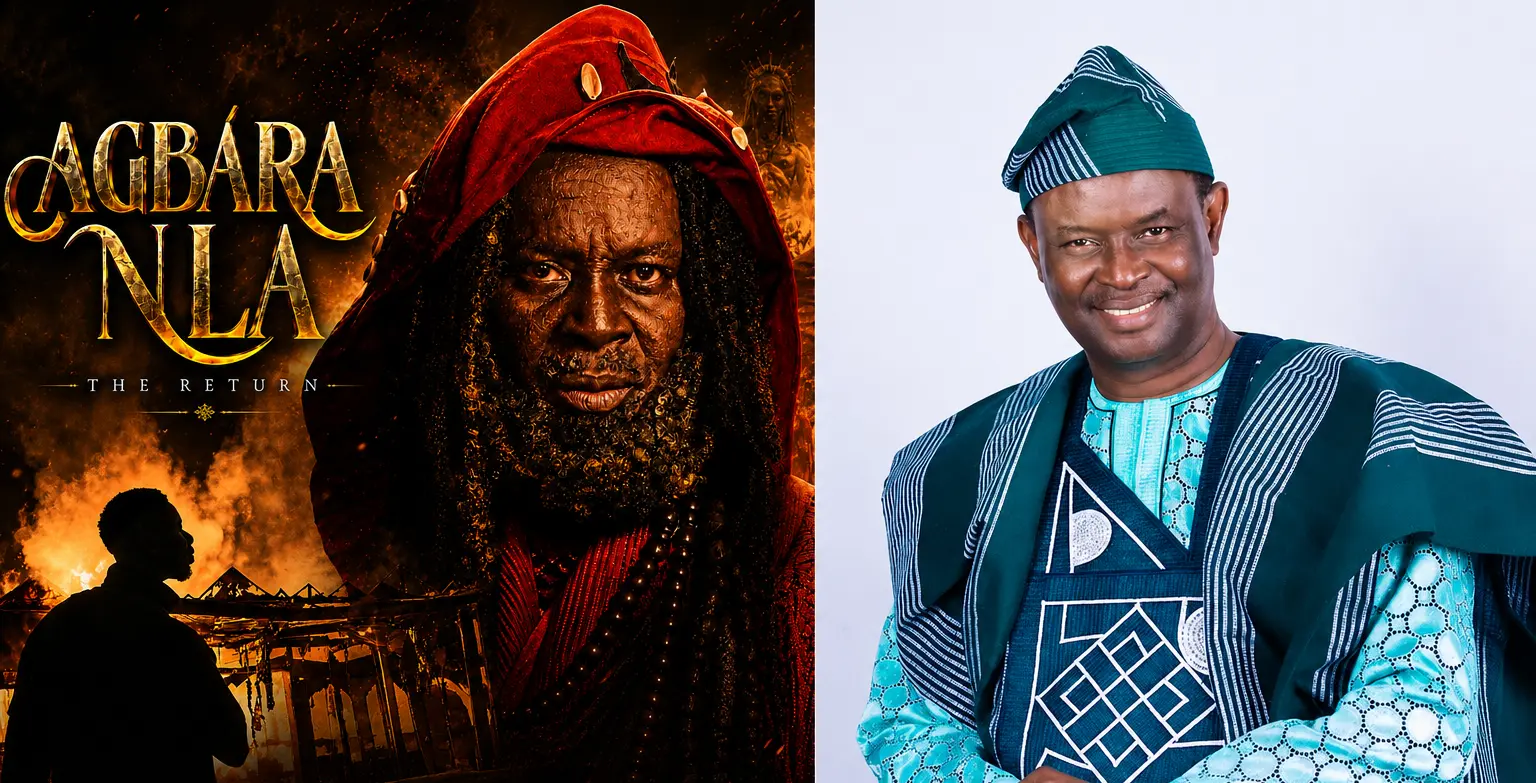
Mike Bamiloye has confirmed that Agbara Nla: The Return will premiere in Nigerian cinemas nationwide on October 1, 2026, a date chosen to coincide with Nigeria’s Independence Day celebrations. This announcement has stirred excitement among fans of Mount Zion Film Productions, who remember the original Agbara Nla as a landmark in Christian filmmaking.
The 1993 classic was one of the most influential faith-based films in Africa, dramatizing the battle between occult powers and divine authority. Its themes of spiritual warfare and evangelism resonated deeply with audiences, cementing Mount Zion’s reputation as a pioneer in gospel-centered cinema. The remake promises to retain this spiritual depth while introducing modern production values.
The new film is directed by Damilola Bamiloye and Joshua Bamiloye, with production led by Chris Odeh, Mohammed Sedik, and Damilola himself. The cast includes Mike Bamiloye reprising his role as Isawuru, alongside Philip Olubakin as Olaboye, Damilola Bamiloye as Kola, and Aanu Kolade Abiodun as Bose. This blend of veteran and younger actors reflects the film’s generational storyline.
Narratively, Agbara Nla: The Return picks up decades after the original, revisiting the fictional village of Abule Muwonleru. A new wave of occult practices threatens the community, forcing both seasoned warriors and younger believers to confront evil forces. The film emphasizes the enduring power of faith, prayer, and evangelism in overcoming spiritual darkness.
Beyond its storyline, the remake carries cultural significance. It bridges the gap between audiences who grew up with the original VHS release and a younger generation accustomed to cinema-quality productions. It also underscores Mount Zion’s growth from grassroots gospel dramas to internationally recognized faith-based films like Abejoye and The Train.
Public reaction has been mixed but largely enthusiastic. Many fans welcome the revival of a beloved classic, while others question whether the themes remain relevant in today’s context. Interestingly, the term Ayamatanga—often mistakenly linked to the film’s witches—has resurfaced in online discussions, highlighting how collective memory sometimes distorts cultural history.